
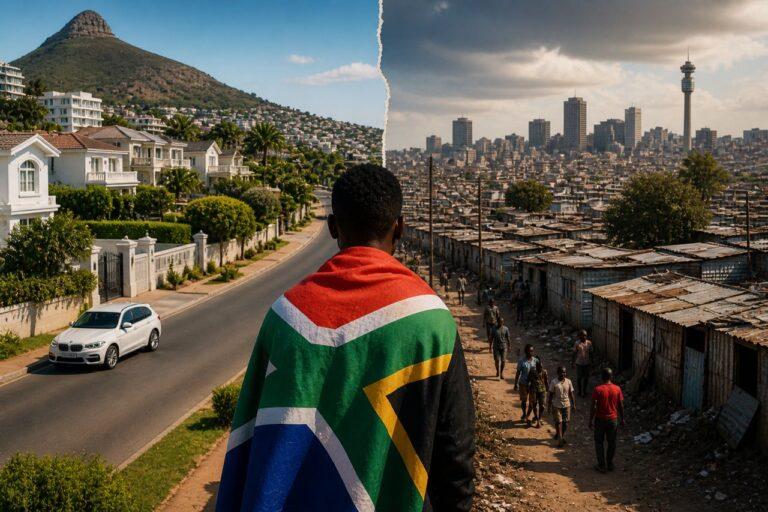
There has been chaos all over South Africa, mostly by the black community of native South Africa, which are definetly Xenophobia or very much like Afrophobia, given weird names such as Operation Dudula and the recent March to March, all targeting mostly innocent black African foreign nationals. I thought something might be wrong somewhere, and that made me look into history, and guess what I found?
Most African nations celebrate Independence Day, marking the end of colonialism and the beginning of self-governance, and it is usually their most important national holiday. Not South Africa, there is no such day on her calendar, and for most black South Africans, that absence reflects something of deeper historical significance.
Despite being touted as Africa’s strongest economy, there is not quite a “freedom like that of other nations“. To understand why one needs to look past the “Rainbow Nation” discourse and focus on power transitions.
In 1910, Britain granted South Africa a measure of self-rule under the Union government. This was, however, an arrangement that put power into the hands of white South Africans only. In 1961, the country declared a republic, cutting itself off entirely from the British monarch. Again, this was not a power transition but a consolidation of power in the hands of apartheid and a continuation of white supremacy.
For most black South Africans, none of this translated to independence. Political control had been moved internally, but it remained within the hands of a minority that denied them freedom of movement, enforced segregation, dictated ownership of land, and controlled the economy.
It is for these reasons that South Africans celebrate Freedom Day rather than Independence Day on April 27 each year. The date marks the 1994 elections, when black South Africans were granted the right to vote, thereby participating in a democratic electoral process for the first time.
That day not only signaled the end of formal apartheid but also marked political participation. Citizens finally had a say in determining who governed them. They did not, however, attain full economic freedom because they still had to overcome the deep-seated economic divisions that had been created over the years.
The struggle for freedom, for many of its people, is not only about voting rights but about who owns land, who controls business enterprises, and how much financial control blacks really have.
Ownership of productive farmland is still concentrated within a minority section of the white population, while significant ownership stakes within major economic industries, including mining and finance, like those of farming, remain in the hands of the white elite.
The country remains one of the most unequal nations globally, with a high disparity in income levels between rich and poor, which often aligns with historic racial divisions.
Some believe the discourse about freedom now centers on economic rather than political issues. Political freedom may have been achieved through voting rights in 1994, but the freedom to own productive means is yet to be attained.
The perception thus persists that celebrating independence may be hollow if the deeper economic question of ownership remains unresolved. The structures of past oppression, though removed in law, remain potent in reality, and South Africa is a country that transitioned but has not been completely divorced from its history.