
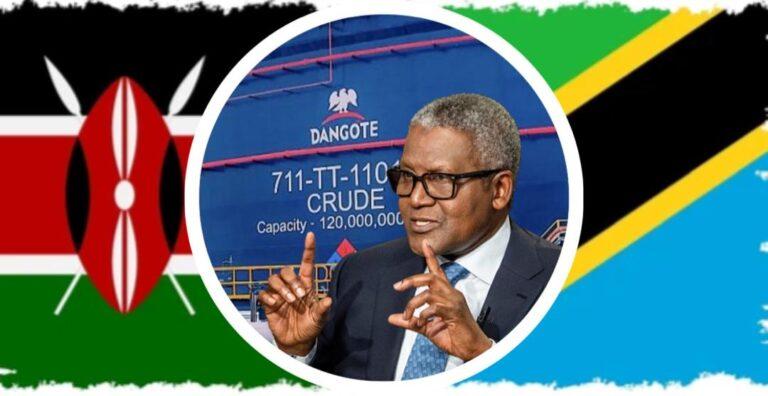
Nigerian billionaire Aliko Dangote has announced plans to consider building a massive oil refinery in Kenya, a move likely to trigger fresh debate across East Africa after earlier discussions focused on Tanzania’s Tanga port.
According to the Financial Times, Aliko Dangote said the proposed refinery could process up to 650,000 barrels of oil per day and would cost between $15 billion and $17 billion.
Dangote reportedly said Mombasa was being considered because of its deep-water port infrastructure and Kenya’s larger economy and consumer market.
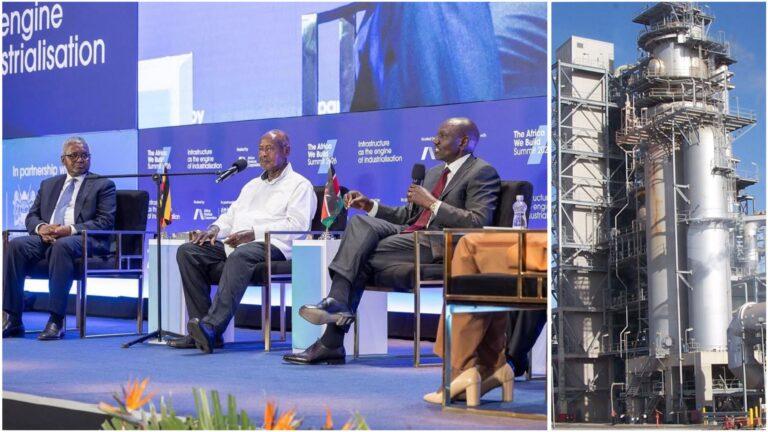
His remarks come just days after William Ruto said East African leaders had been discussing the possibility of constructing a joint regional refinery in Tanzania’s Tanga port.
Dangote, however, appeared to compare Mombasa and Tanga directly, arguing that Kenya offered broader market opportunities and stronger logistical advantages for such a large-scale investment.
He added that the final decision would depend on the Kenyan government, saying he was ready to follow the direction chosen by President Ruto’s administration.
The latest development marks a possible shift from earlier reports suggesting Tanzania was leading negotiations to host East Africa’s first mega refinery project.
The refinery proposal has already sparked debate online, with some commentators in East Africa claiming Kenya’s more open business environment and investor protections may have influenced Dangote’s preference for Mombasa over Tanzania.
Others, however, argue that discussions remain ongoing and that no final location has officially been confirmed.
If completed, the refinery would become one of the largest industrial energy projects ever built in East Africa and could significantly reduce the region’s dependence on imported refined petroleum products.
Dangote already owns Africa’s largest refinery in Nigeria, a project widely viewed as one of the continent’s most ambitious industrial investments.
Analysts say whichever country secures the project could gain major economic benefits through fuel processing, regional exports, shipping activity, and job creation across the energy sector.