
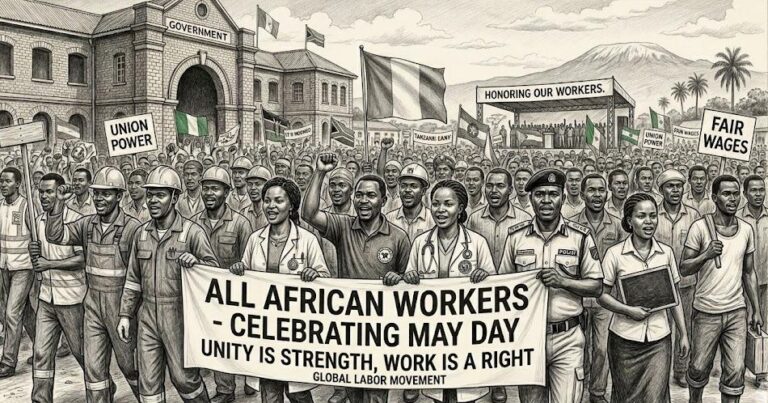
Millions of workers across Africa marked International Workers’ Day on Friday with marches, speeches, and renewed demands for better pay, job security, and fair working conditions.
From South Africa to Kenya, Nigeria, and Tanzania, the day was observed through a mix of official ceremonies and union-led demonstrations, reflecting both celebration and frustration across the continent’s labor force.
In South Africa, trade unions used the day to press for wage increases and stronger protection against unemployment, which remains one of the highest globally.
In Kenya, labor groups raised concerns over the rising cost of living, while in Nigeria, unions focused on minimum wage adjustments and inflation pressures.
In Tanzania, workers gathered in regional events led by government officials, with messages centered on productivity, national development, and workers’ rights, as authorities balanced celebration with calls for economic discipline.
Across several countries, the tone was similar: recognition of workers’ contribution, but also growing pressure from inflation, youth unemployment, and informal labor markets that leave millions without protections.
International Workers’ Day, also known as May Day, has its origins to the Haymarket affair in the United States. Workers had gone on strike demanding an eight-hour workday, and a bombing during a protest in Chicago led to deaths and a global labor movement turning point.
May 1 was later adopted by labor movements worldwide as a symbol of workers’ struggle and solidarity. Today, it is recognized in more than 80 countries as a public holiday and observed informally in many others.
In Africa, the day has evolved beyond its historical roots to reflect local realities. Labor unions increasingly highlight issues such as informal employment, delayed wages, and limited social protection systems, especially among young workers.
Despite these challenges, May Day remains one of the most visible platforms for workers to engage governments. Speeches by political leaders often include policy promises, while unions use the moment to push for reforms and accountability.
This year’s celebrations come at a time when many African economies are under pressure from global shocks, currency instability, and rising public debt, factors that continue to shape labor conditions across the continent.