Physical Address
Delta Corner Tower,
Waiyaki Way, Westlands, Nairobi, Kenya.
Contact us:
Email: info@todaysw.com
Physical Address
Delta Corner Tower,
Waiyaki Way, Westlands, Nairobi, Kenya.
Contact us:
Email: info@todaysw.com
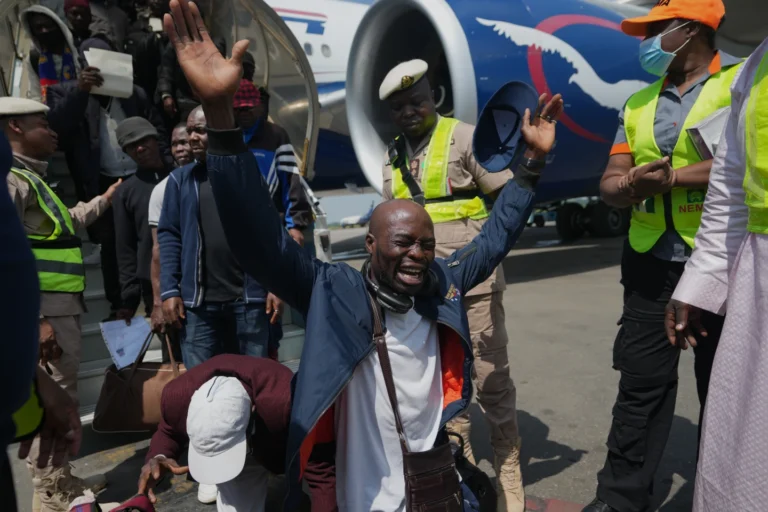
Fresh xenophobic violence in South Africa is exposing deeper cracks, as unemployment fears, misinformation, and rising anger against African migrants spill into the streets.
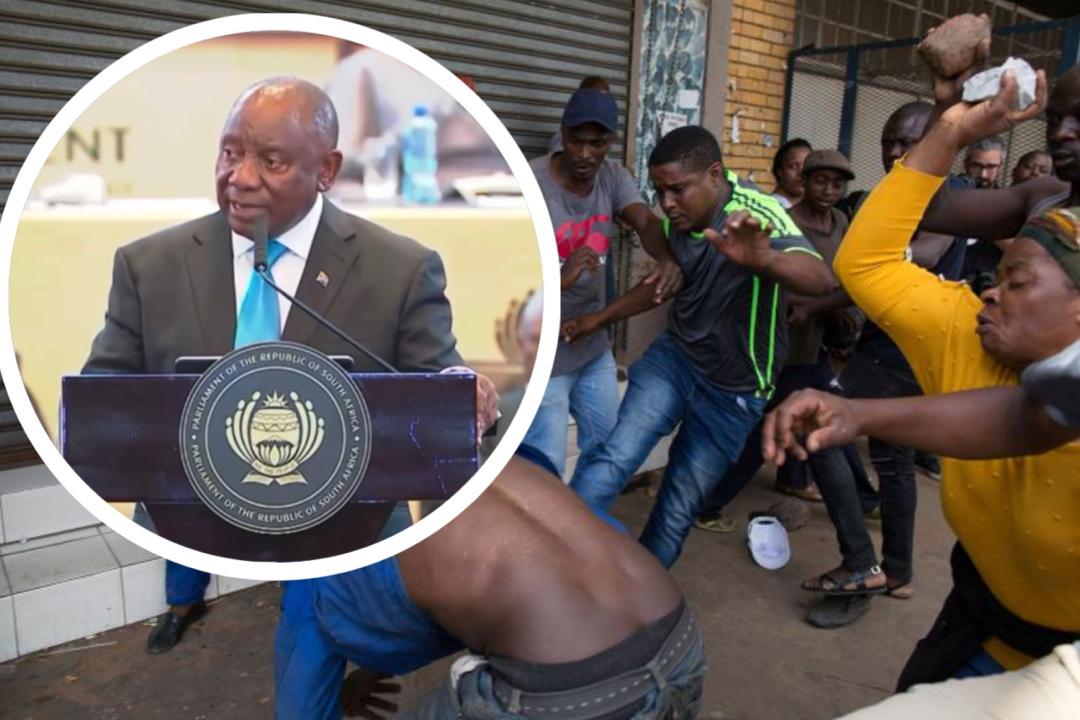
Violence against African immigrants has once again rose into trends in parts of South Africa, with protests get into physical, mental, and emotional assaults, looting, and targeted intimidation. What began as calls for job protection by local groups has rapidly transformed into organized hostility, now partly driven by a newly formed movement calling itself the Labor and Civic Organization (LCO).
Witnesses describe a pattern that feels familiar. Demonstrations over unemployment have turned into hate rallies. Shops owned by foreign nationals have been vandalized. In some neighborhoods, migrants report being barred from clinics, workplaces, and public spaces.
The rhetoric has also hardened. Some protesters are now branding anyone perceived as “non-local” a foreigner, regardless of legal status. In circulating videos, individuals are seen confronting residents with documented citizenship, dismissing their papers and demanding they leave immediately.
This shift has alarmed analysts who say the situation is no longer just about jobs.
“It starts with economics, but it doesn’t stay there,” said one regional observer. “It becomes identity, belonging, and eventually exclusion.”
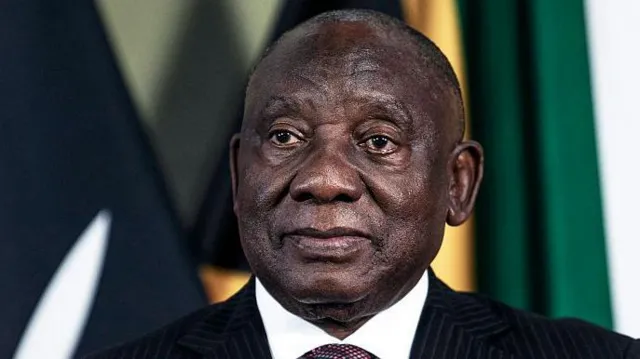
South African President Cyril Ramaphosa addressed similar tensions weeks ago, warning:
We will not tolerate violence and acts of lawlessness directed at foreign nationals. No foreign national should be unlawfully barred from accessing public facilities, including health facilities.
Cyril Ramaphosa
On the ground, however, migrants say reality is drifting further from that message.
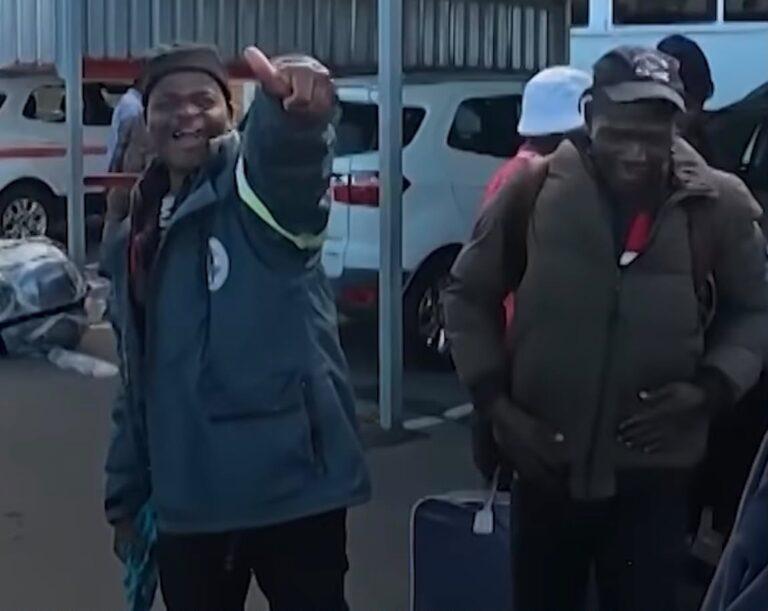
“They’re fighting us in the hospitals, workshops, they’re fighting us everywhere,” one immigrant said during a local interview. “Why? What did we do?”
Another dismissed the central claim driving the protests. “Foreigners are not working at the companies. When we say they are taking jobs, those are lies. They’re very few,” he said. “Most of the foreigners are doing their own businesses. I have been in Africa for 20 years. I’ve never worked for any company.”
Data from past labor studies has often supported this view, showing that immigrants in South Africa are more likely to be self-employed or concentrated in informal sectors rather than dominating formal employment.
Still, the perception persists and in many cases, perception is proving more powerful than fact.
Unemployment remains one of the country’s deepest challenges, especially among young people. As opportunities shrink and competition grows, frustration has found an easy target. Foreign nationals, visible in local economies through small businesses and trade, are increasingly blamed for structural issues rooted in education gaps, inequality, and slow economic growth.
Critics argue that the violence reflects a failure to address these underlying realities.
Some point to education. Not just formal schooling, but economic awareness understanding how global labor markets work, why businesses seek lower costs, and how entrepreneurship shapes modern economies. Without that foundation, anger can easily be redirected.
Others highlight a contradiction often ignored in the protests: millions of South Africans themselves live and work abroad, from Europe to North America and across the African continent, pursuing the same opportunities migrants seek within South Africa.
Yet on the streets, those parallels are rarely acknowledged.
In one widely shared incident, a man of Nigerian descent married to a South African citizen, with children born and raised in the country, was told by a group of protesters that his time was up. His legal documents did not matter. His family ties did not matter. He was told to leave.
The episode has raised difficult legal and moral questions about citizenship, identity, and who gets to belong.
South African law provides multiple paths to citizenship beyond birth, including naturalization and marriage. But in the current climate, those distinctions are increasingly ignored in favor of a more rigid, exclusionary definition of nationality.
Across the continent, reactions have been loud and emotional. In Nigeria, anger has resurfaced in public debates and radio shows, with some recalling past incidents where Nigerian-owned businesses in South Africa were looted. During earlier waves of violence, Nigeria’s government even recalled its ambassador, calling the attacks “totally unacceptable.” On social media this week, one user wrote, “They want to trade across Africa but hate Africans at home. That contradiction will catch up with them.” Similar frustration has been echoed in Kenya and Ghana, where commentators say the violence undermines the idea of African unity.
Regional bodies have also spoken before in strong terms. The African Union previously condemned such attacks, warning that “any form of xenophobia is a direct threat to African integration and unity.” That message is surfacing again as new incidents spread, with analysts warning that continued violence could weaken trust between African nations at a time when cooperation is being pushed through trade agreements and open-border policies.
There are now growing fears of consequences for ordinary South Africans beyond their borders. In past incidents, there were calls in parts of Nigeria and Zambia to retaliate against South African businesses. A trader in Accra, Ghana, told a local station, “If they burn our shops there, why should we welcome their companies here?” While governments have largely avoided official retaliation, the public mood is shifting, and that shift can quietly affect how South Africans are treated when they travel, work, or invest across Africa.
Observers say the solution must begin with honesty. “Foreigners are an easy target, but they are not the cause of unemployment,” one labor analyst in South Africa said during a televised discussion. Economists have repeatedly pointed to deeper structural problems; education gaps, inequality, and slow job creation. Without addressing those, the cycle of blame is likely to repeat.
There are also calls for responsibility at both levels; citizens and the state. Community leaders are urging protesters to step back from violence and engage with facts. “You don’t fix poverty by attacking someone poorer than you,” said a Johannesburg-based activist during a community forum. At the same time, pressure is mounting on the government to act decisively through visible policing, protection of legal residents, and sustained public education campaigns that counter misinformation.
Beyond policy, the damage to reputation is already unfolding. Across Africa, the images coming out of South Africa are shaping perception. A university student in Nairobi, Kenya, put it bluntly in an online discussion: “South Africa used to inspire us. Now it scares people.” For a country long seen as a symbol of African progress and resilience, that shift in perception may prove difficult to reverse.
As tensions continue to rise, community leaders warn that the line between protest and persecution is thinning. Reports of intimidation are spreading, and migrants say fear is shaping daily life in ways that go beyond economics.
The government has yet to outline new measures beyond previous condemnations, even as pressure mounts for stronger intervention and public education campaigns aimed at countering misinformation.
Meanwhile, in affected communities, daily routines are shifting; shops closing early, families staying indoors, and migrants reconsidering their future in a country many have called home for decades.