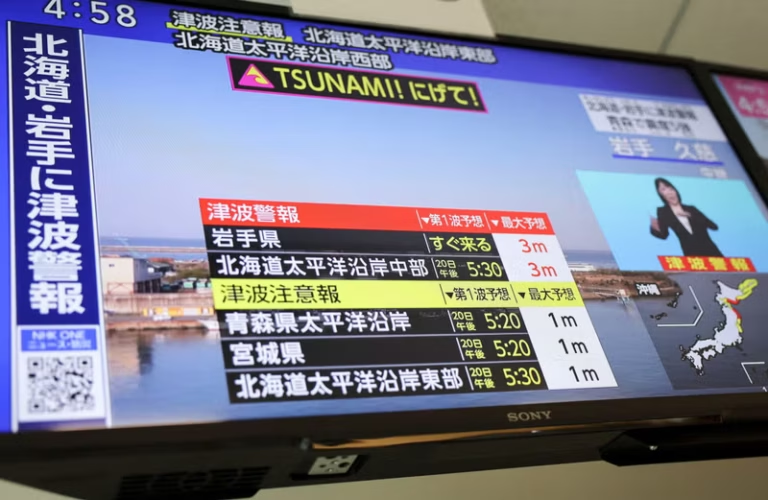
A powerful earthquake measuring around 7.5 to 7.7 magnitude struck off the northern coast of Japan on Monday, triggering tsunami alerts and mass evacuations but the bigger concern is what could come next.
The quake hit the Sanriku coastal region at a shallow depth, prompting authorities to issue a tsunami warning for waves of up to three metres. While waves were eventually recorded at about 80 centimetres and alerts were later downgraded, more than 170,000 residents across northern prefectures were urged to evacuate as a precaution.
Japan’s meteorological authorities issued a rare advisory warning of an increased risk around 1% of a much larger earthquake, magnitude 8 or higher, within the coming days. That figure may seem small, but it is significantly higher than the usual baseline risk of about 0.1%, placing the country on heightened alert.
This type of advisory is uncommon and reflects growing scientific concern about seismic patterns along the Japan Trench, where the Pacific tectonic plate is subducting beneath northern Japan. The region has a long history of major earthquakes, including the devastating 2011 disaster that reshaped global understanding of tsunami risk.
Monday’s quake, while relatively moderate in damage with only minor injuries and limited structural impact reported, triggered widespread disruption. Bullet train services were halted, highways temporarily closed, and nuclear facilities inspected as a precaution, with no irregularities found.
In towns like Kamaishi and Otsuchi, areas still marked by the memory of 2011, evacuation orders were issued quickly, reflecting how deeply preparedness is embedded in Japan’s disaster response culture.
The country’s tsunami warning system, refined after past catastrophes, again proved central issuing alerts within minutes of the quake and guiding coastal populations to higher ground.
Yet experts say this event is less about what happened and more about what it signals.
Clusters of seismic activity, like the one observed along the Sanriku coast, can sometimes precede larger ruptures along fault lines. While not predictive, they raise the probability enough to trigger government advisories and public readiness campaigns.
Prime Minister Sanae Takaichi urged residents to review evacuation plans and emergency supplies, as authorities continue monitoring aftershocks and seismic data.