Physical Address
Delta Corner Tower,
Waiyaki Way, Westlands, Nairobi, Kenya.
Contact us:
Email: info@todaysw.com
Physical Address
Delta Corner Tower,
Waiyaki Way, Westlands, Nairobi, Kenya.
Contact us:
Email: info@todaysw.com
Ethiopia heads into its seventh general election since 1991 on June 1, but many observers, including the Swahili Today analysts, believe the outcome is already decided long before the first ballot is counted.
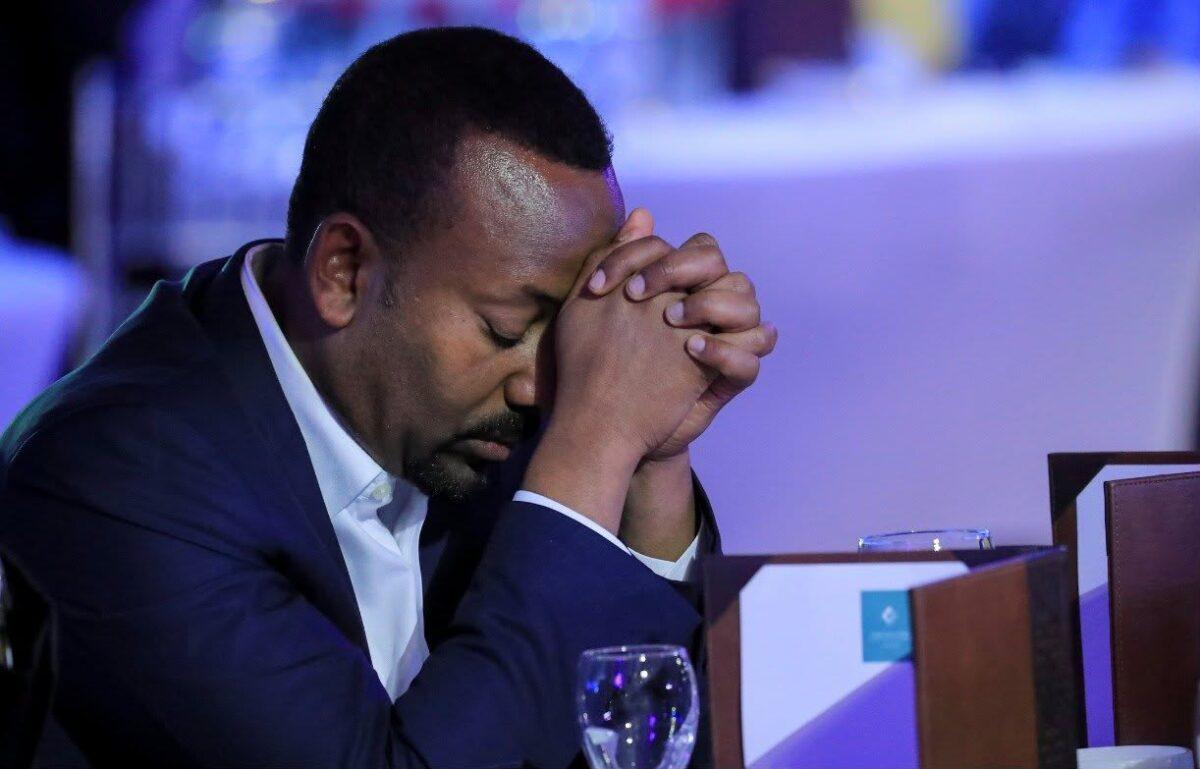
More than 50 million Ethiopians are expected to vote today as the country holds its seventh general election since the fall of the Derg regime in 1991. Officially, 47 political parties and thousands of candidates are contesting seats across the country. Unofficially, however, few believe anybody is truly competing with Prime Minister Abiy Ahmed and his ruling Prosperity Party (PP).
The Prosperity Party already dominates Ethiopia’s 547-member House of Peoples’ Representatives, controlling more than 500 seats. Analysts expect the party to secure another victory, giving Abiy Ahmed a clear path toward remaining Prime Minister for another term.
That reality has reignited an old question inside and outside Ethiopia: if the winner is already known, how competitive is the election?
Unlike presidential systems, where citizens directly elect their national leader, Ethiopia’s Prime Minister is chosen by parliament. Voters elect Members of Parliament, and the party with a parliamentary majority effectively selects the country’s executive leader.
In practice, critics argue that once a single party dominates parliament, citizens have little direct influence over who ultimately exercises state power.
For Abiy Ahmed, today’s vote marks another extraordinary chapter in one of Africa‘s most dramatic political journeys.
When he rose to power in 2018 after years of anti-government protests, he was celebrated as a reformer. He released political prisoners, welcomed exiled opposition figures back home, and signed a historic peace agreement with neighboring Eritrea.
Those moves earned him the 2019 Nobel Peace Prize and transformed him into one of Africa’s most admired leaders.
Yet only a year later, Ethiopia descended into one of the continent’s deadliest conflicts.
The Tigray War, which erupted in late 2020 between federal forces and the Tigray People’s Liberation Front (TPLF), left hundreds of thousands displaced and triggered accusations of atrocities, mass killings, and human rights abuses from multiple sides.
The conflict fundamentally changed Abiy’s international image. A leader once praised for ending conflict was suddenly being accused by critics of presiding over one of Africa’s worst wars in decades.
One of the biggest controversies surrounding this election is that voting is not taking place in Tigray, meaning millions of residents there will again be left without federal parliamentary representation. Reuters and the Associated Press both report that instability and unresolved tensions in the region have prevented voting from being organized.
For many Tigrayans, this means a sixth consecutive year without representation in Ethiopia’s federal parliament, despite the Pretoria peace agreement, which formally ended the war in 2022.
The exclusion has fueled criticism that a national election cannot be fully representative when an entire region is excluded from the voting process.
At the same time, armed conflicts continue to affect parts of Oromia and Amhara, where insecurity, insurgencies, and military operations have raised concerns about voter participation and political freedoms.
Several opposition groups have also accused the government of creating an uneven political environment.
Reports from international observers, analysts, and opposition figures have pointed to arrests, restrictions on political activities, and shrinking civic space in recent years. Critics argue these conditions make it difficult for opposition parties to compete on equal footing with the ruling Prosperity Party.
Among the better-known opposition forces are the National Movement of Amhara (NaMA), Ethiopian Citizens for Social Justice (Ezema), regional parties, and independent candidates. However, none appear capable of challenging the Prosperity Party’s nationwide political machinery or parliamentary dominance.
The Prosperity Party itself was created by Abiy Ahmed in 2019 after dissolving the former ruling coalition that had governed Ethiopia for decades. Supporters describe the party as an effort to move beyond ethnic-based politics, while critics argue it has concentrated political power around the Prime Minister and weakened rival centers of influence.
The country is holding another national election with dozens of parties and millions of registered voters. Yet many Ethiopians enter election day convinced that the result is already settled.
For supporters of Abiy Ahmed, that expectation reflects genuine popularity, economic projects, and the desire for stability after years of conflict.
For his critics, it reflects something else entirely: a political system where parliamentary arithmetic, opposition weakness, regional conflicts, and accusations of democratic backsliding have made genuine competition increasingly difficult.