

East African billionaire Mohammed Dewji is preparing one of the region’s biggest cross-border business expansions after showing interest to invest $50 million in a new soft drinks factory in Kenya, a move that could reshape the regional beverage market and intensify competition against global giants Coca-Cola and Pepsi.
The planned factory, expected to be built in the coastal city of Mombasa, will manufacture MeTL Group’s flagship beverage brands, including Mo Cola, Mo Xtra, and Mo Malt.
But beyond soda, the project is increasingly being viewed as a statement about where East African billionaires now see long-term stability, market size, and industrial opportunity.
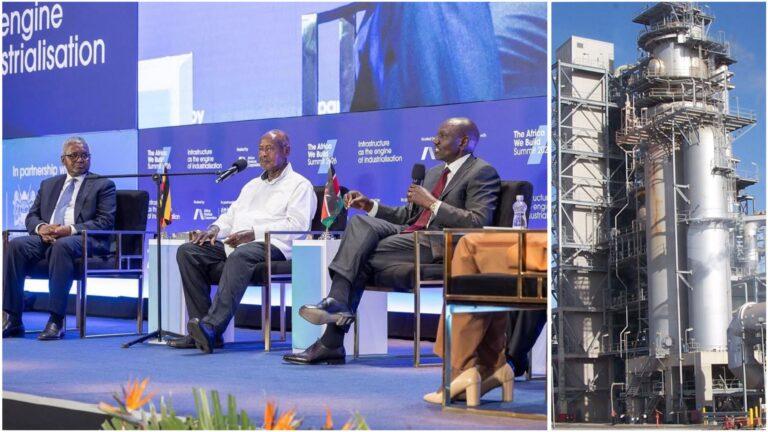
Speaking during the Africa Forward Summit in Nairobi, Dewji said Kenya’s economy was simply too important for regional investors to ignore.
“We cannot afford to ignore Kenya because it is the largest economy in our region,” Dewji told Business Daily.
Construction of the plant could begin within the next 12 months, according to reports, with MeTL Group already acquiring land in Mombasa while exploring expansion strategies that may also involve mergers or acquisitions.
Dewji is attempting to replicate in Kenya the same low-cost model that transformed Tanzania’s beverage market over the past decade. In Tanzania, Mo Cola reportedly managed to overtake Coca-Cola in sales volumes by targeting low-income consumers with significantly lower prices.
Reports indicate MeTL wants to sell a 300ml bottle in Kenya for roughly KSh15, far below the approximately KSh40 price range of many competing brands.
That pricing strategy could trigger a major price war inside Kenya’s beverage industry, one of East Africa’s most competitive consumer markets.
Analysts say Dewji’s move reflects a broader trend of Tanzanian capital increasingly flowing into Kenya despite years of political and economic rivalry between the two neighboring countries.
In recent years, several Tanzanian business groups have expanded aggressively into Kenya through cement, energy, logistics, and hospitality investments. Dewji’s entry into beverages now places one of East Africa’s richest businessmen directly into one of the region’s toughest consumer sectors.
The port city offers direct access to shipping routes, lower import costs for raw materials, and strong transport connections into Uganda, Rwanda, South Sudan, and Eastern Congo. Analysts say the location could eventually turn Kenya into a regional export hub for MeTL beverages.
Some business observers have also linked the investment to growing perceptions that Kenya currently offers a larger and more predictable consumer market for manufacturing expansion compared to several neighboring economies.
Dewji himself avoided directly comparing Kenya and Tanzania politically, but acknowledged Kenya’s scale and competitiveness.
“Yes, Kenya is more advanced, more competitive, but if you’re taking a long-term tenure, then it is definitely a country that you cannot ignore,” he said.
The expansion marks MeTL Group’s first major manufacturing investment in Kenya.
The company, formally known as Mohammed Enterprises Tanzania Limited, has grown into one of Africa’s largest indigenous conglomerates, operating across sectors including food processing, textiles, logistics, agriculture, energy, and manufacturing.
Dewji, widely known across East Africa as “Mo,” is currently ranked by Forbes as East Africa’s richest person with an estimated net worth exceeding $2 billion.
Industry experts say the biggest challenge will not be pricing alone, but distribution.
Kenya’s beverage market has historically been difficult for new entrants because Coca-Cola and Pepsi possess decades-old supply chains, marketing dominance, and nationwide retail penetration.
Still, supporters of Dewji’s expansion argue the billionaire’s focus on affordability could resonate strongly with consumers struggling under rising living costs across the region.
Stephen Mutoro, secretary-general of the Consumers Federation of Kenya, said the market still lacks products targeting poorer consumers.
“What is needed is a beverage product that focuses on poor consumers,” Mutoro said in comments cited by Kenyan media.
If successful, Dewji’s Kenya project could become one of the clearest signs yet that East African business competition is no longer being driven only by Western multinationals, but increasingly by regional billionaires battling for dominance across neighboring markets.