

Two years ago, artificial intelligence struggled to generate even a believable short video of a celebrity drinking water.
Hands bent unnaturally. Faces melted between frames. Objects changed shape without warning. People mocked the technology online because it looked broken, unfinished, and almost cartoonish.
Today’s AI video systems can already create scenes that resemble high-budget movie productions. Lighting behaves naturally. Camera movements feel cinematic. Facial expressions look increasingly human. In some cases, viewers struggle to distinguish AI-generated footage from real productions immediately.
What once looked impossible is now becoming commercially viable. And the next stage may be the filmmaking itself. Industry analysts increasingly believe that within the next few years, AI systems could generate full-length films from simple text prompts.
A user might type:
“Create a psychological horror movie set in an abandoned jungle mansion during a thunderstorm.”
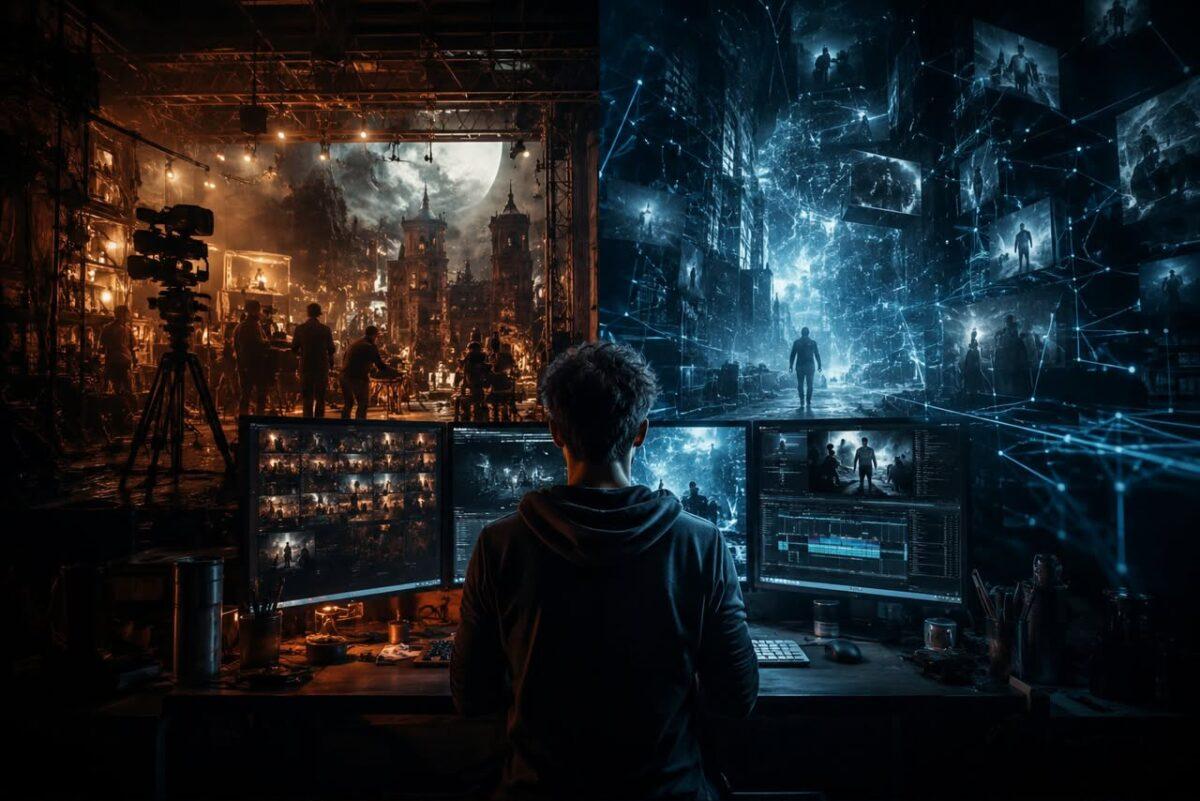
Minutes later, the system could produce a complete feature film with characters, dialogue, cinematography, sound design, music, and visual effects generated almost entirely by machines.
Not short clips or experimental demos, but the entire movies. That possibility is no longer viewed as science fiction inside large technology companies. The shift is already beginning quietly across parts of the entertainment industry.
Studios are increasingly experimenting with AI-assisted editing, script analysis, visual effects, voice generation, and concept art production as companies search for ways to reduce costs and accelerate production timelines.
Several Hollywood writers and actors previously warned during industry strikes that AI could eventually replace parts of the creative workforce rather than simply assist it.
But many discussions around AI have focused mostly on copyright battles, celebrity likeness disputes, and deepfakes.
Believe me when I say that this debate misses the larger issue; they say, “The real disruption may come when AI no longer imitates humans at all“. Instead of copying actors, voices, or scripts, future systems could generate completely original characters, stories, and fictional worlds with no direct copyright violation attached.
That creates a legal and economic gray zone that governments around the world are still struggling to understand.
Technology companies continue racing to build more powerful models capable of producing increasingly realistic visuals, dialogue, and storytelling because the commercial stakes are enormous.
No company wants to slow down while competitors continue advancing. At the same time, most ordinary internet users still mainly encounter AI through memes, fake trailers, celebrity edits, and experimental videos shared online.
Yet behind those viral clips, the underlying technology is improving at extraordinary speed. Some media experts compare the current moment to the early years of internet piracy in the 2000s, when film studios feared the entire entertainment industry might collapse under illegal file sharing.
Piracy ultimately did not destroy cinema, partly because governments and companies adapted by targeting distribution systems rather than trying to stop technology itself.
And at this rate, we can all agree and say AI may follow a similar path. The question is no longer whether AI-generated entertainment will exist.
The question is how industries, governments, and audiences will respond once machine-generated films become cheaper, faster, and sometimes indistinguishable from human-made productions.
Many fear the transformation may not happen dramatically, but gradually. One studio replaces background artists with AI tools.
Another reduces editing teams.
Another automates script drafts.
Another cuts the animation staff.
Step by step, tasks traditionally handled by humans become partially or fully automated.
I could proudly warn that entire creative professions could slowly shrink before the public fully realizes what is happening.
Supporters of AI argue that the technology could also democratize filmmaking by allowing independent creators with small budgets to produce ambitious stories previously possible only for major studios.
But even some supporters acknowledge that the ethical and economic questions remain unresolved.
Who owns AI-generated art?
Who gets paid?
Who loses jobs?
And what happens when audiences begin forming emotional connections with entertainment created mostly by algorithms rather than people?
For now, Hollywood continues experimenting cautiously while technology companies accelerate development at full speed. The machines are still improving. And each update is making the future harder to ignore.