

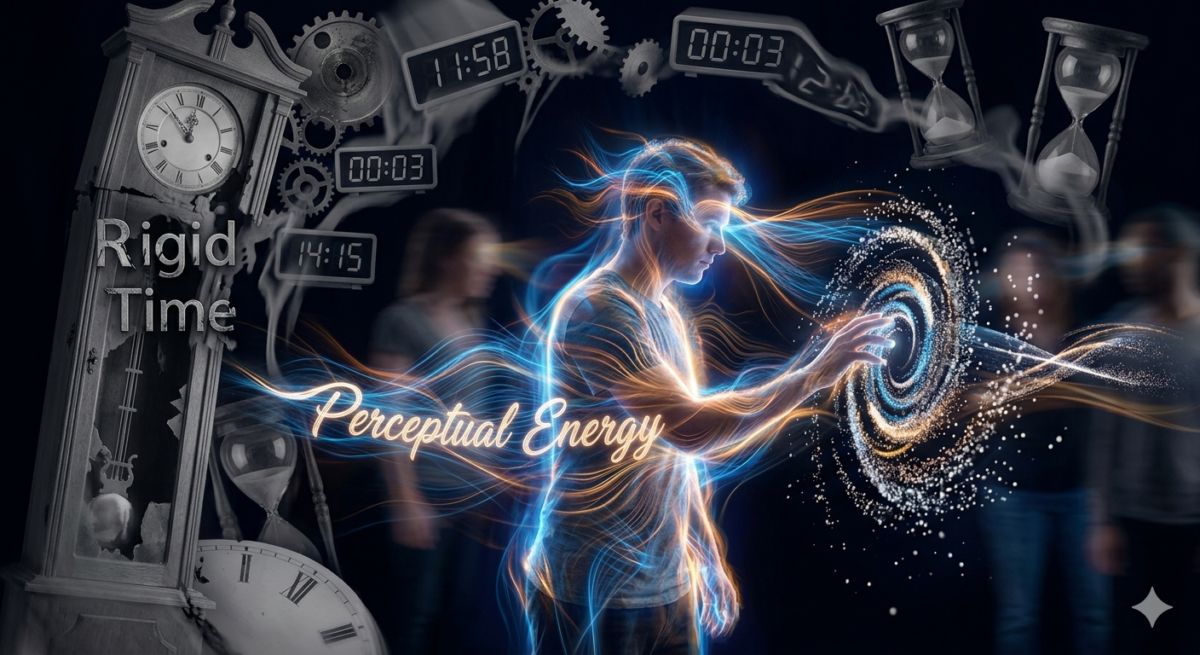
Time is rigid; the external clock is a byproduct of human consciousness. At its core, while time provides a necessary framework for an event to occur, it lacks a standard value when shared between people. Instead of time acting upon us, we interact with events through a Perceptual energy that is unique to our internal state.
This energy acts as a lens, distorting or clarifying the passage of moments based on our level of engagement, making the chronological clock secondary to the psychological experience.
This perception is inherently biased because it is powered by a dynamic, rather than static, energy. Because an individual’s internal energy fluctuates, shifting with emotion, adrenaline, or exhaustion, their experience of a single event is constantly in flux.
One person might bring a high intensity of focus that makes a moment feel incredibly dense and prolonged, while another, possessing a different energetic state, might find the same event fleeting. Consequently, the Bias we see in how people describe their day is not a failure of memory, but a literal difference in how their perceptual energy processed the event.
Ultimately, what we traditionally call Time is merely the stage, while Perceptual energy is the lead actor.
It is the intensity and quality of this energy that dictates the weight and duration of our lives. By recognizing that this energy is dynamic, we move away from the idea of being victims of time and toward the idea that we are active participants who shape the dimensions of our own experiences through the way we perceive them.
About The Author