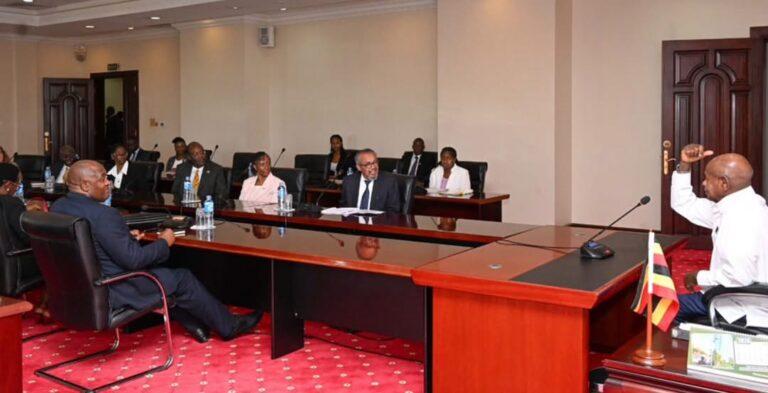


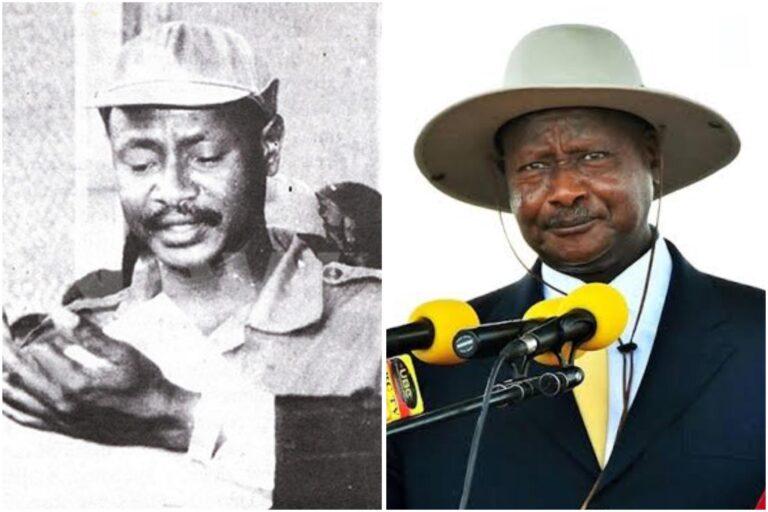
Yoweri Museveni has sworn in for a seventh term as Uganda’s president, extending his rule to 45 consecutive years if he completes the new mandate ending in 2031.
The inauguration on May 12, 2026 cements Museveni’s place among Africa’s longest-serving leaders, alongside figures such as Denis Sassou Nguesso, Teodoro Obiang Nguema Mbasogo and Paul Biya.
Museveni won the January 2026 election with 71.65 percent of the vote, according to official results, securing another five years in office.
When he first took power in 1986 after a guerrilla war, Uganda was emerging from years of political violence, military coups and economic collapse.
At the time, Namibia had not yet gained independence, Eritrea was still under Ethiopian control and South Sudan did not yet exist as an independent country.
Museveni entered office, presenting himself as a revolutionary leader promising stability and national reconstruction after years of instability under previous governments.
Over the decades, his administration oversaw economic reforms, infrastructure growth and relative stability compared to some neighboring countries.
But Uganda today is very different from the country Museveni inherited four decades ago.
A large percentage of the population was born long after the wars and political turmoil that brought him to power.
Many younger Ugandans have grown up in a more connected and technologically driven society shaped by social media, urbanization and rising political awareness.
For many in the younger generation, the argument that Museveni “brought peace” is no longer enough to justify remaining in power indefinitely.
Instead, public debate has increasingly shifted toward unemployment, political freedoms, corruption, institutional reform and leadership transition.
That generational frustration helped opposition figures such as Robert Kyagulanyi gain strong support among urban youth and first-time voters in recent years.
Critics accuse Museveni’s government of using state institutions and security forces to suppress opposition activities, arrest critics and weaken democratic competition.
Human rights organizations have repeatedly raised concerns about restrictions on protests, intimidation of opposition supporters and crackdowns during election periods.
Supporters of Museveni, however, argue that his leadership has maintained national stability and protected Uganda from the conflicts that affected several countries in the region.
The new term is now widely viewed as one that could define how history ultimately remembers Museveni, not only as the man who stabilized Uganda after war, but also as a leader facing growing pressure over succession and democratic transition.