Physical Address
Delta Corner Tower,
Waiyaki Way, Westlands, Nairobi, Kenya.
Contact us:
Email: info@todaysw.com
Physical Address
Delta Corner Tower,
Waiyaki Way, Westlands, Nairobi, Kenya.
Contact us:
Email: info@todaysw.com
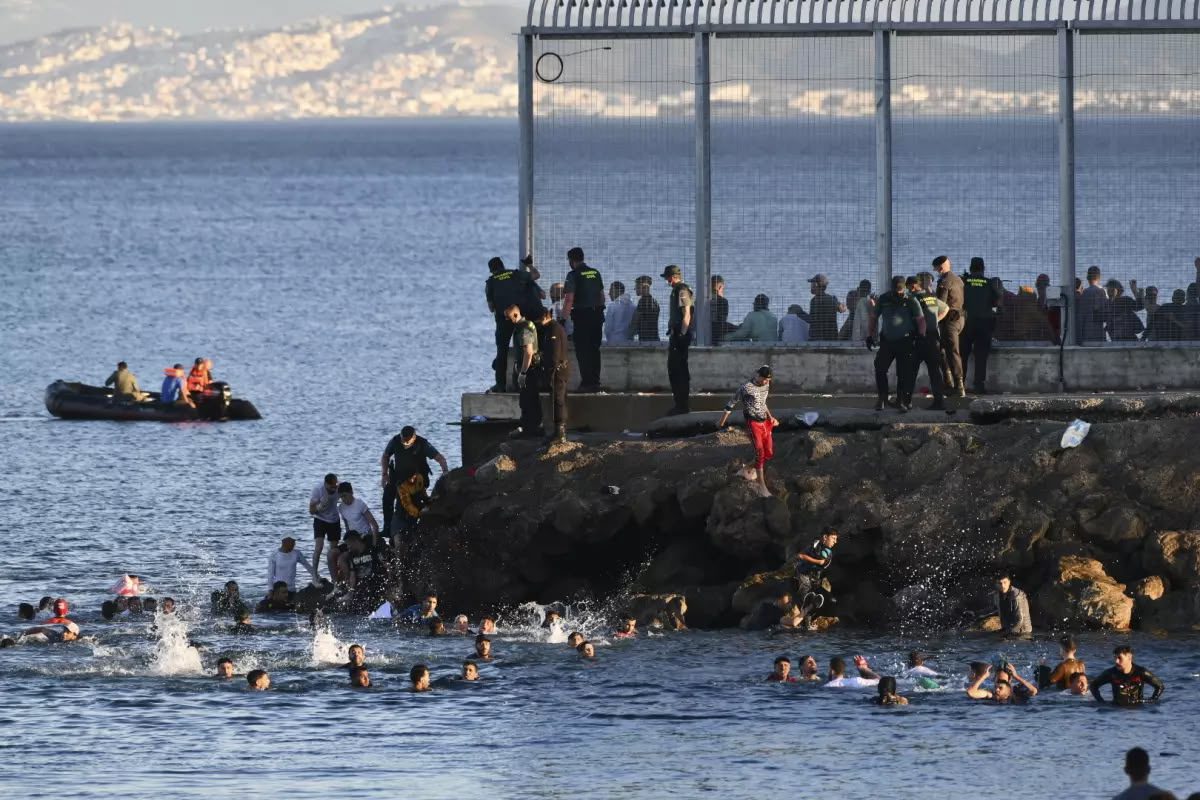
Spain has deployed military personnel to its North African enclave of Ceuta after between 2,000 and 3,000 migrants crossed into the territory from neighboring Morocco in a single day, overwhelming local authorities and leaving at least nine people dead in one of the deadliest border crossings in recent years.
Most of the migrants entered by sea, swimming around the Tarajal breakwater or using flotation devices to reach Spanish territory. The sudden influx stretched local police and emergency services beyond their capacity, prompting Madrid to send dozens of military personnel to reinforce security and support officers already stationed in the enclave.
Ceuta, together with Melilla, is one of Spain’s two autonomous cities in North Africa and forms the European Union’s only land border with Africa. Because of its unique location, the territory has long been a major destination for migrants hoping to begin a new life in Europe.
Spanish authorities said the latest crossing overwhelmed reception facilities as thousands arrived within hours. Rescue teams were also deployed along the coastline after several migrants got into difficulty in the water. Officials later confirmed that at least nine people lost their lives during the crossing.
The latest crisis has once again highlighted the risks many migrants are willing to take in search of better opportunities. One migrant interviewed after reaching Ceuta said many people leave their countries believing Spain offers a brighter future, only to discover a much harsher reality.
“People think that in Spain there is a future and work for everyone, but when you arrive, you find the harsh reality. You have nothing, and people treat you as if you are nobody,” the migrant said.
The comments reflect the growing frustration among many migrants who risk dangerous journeys across land and sea in pursuit of safety, employment and a better life, only to face uncertainty after arriving in Europe.
The Spanish government has responded by deploying additional security personnel, including members of the armed forces, to assist local police in restoring order and strengthening border controls. Authorities are also working with Morocco as investigations continue into the circumstances surrounding the mass crossing.
The incident has renewed debate over migration policies across Europe, with Ceuta once again becoming the focal point of one of the continent’s busiest migration routes. Similar mass crossings in previous years have tested relations between Spain and Morocco while raising questions about border security, humanitarian protection and the growing pressure on European migration systems.
As authorities continue rescue and identification efforts, the latest tragedy serves as another reminder of the dangers faced by thousands of people who attempt the journey to Europe each year, many of whom risk everything in the hope of finding a safer and more stable future.