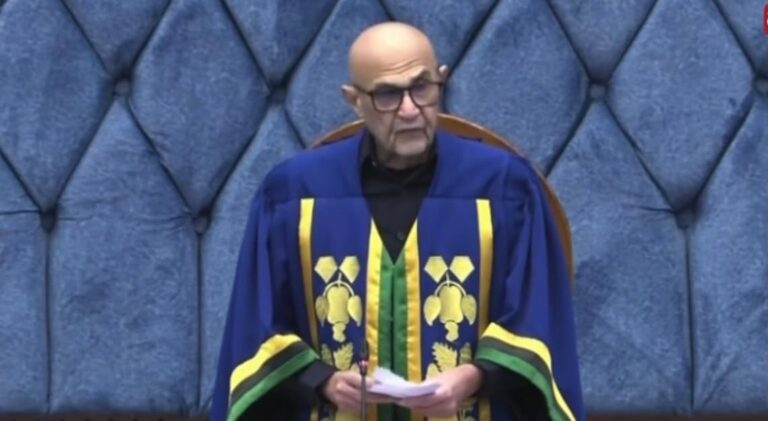
Rwanda’s President Paul Kagame delivered a robust defence of his government’s policies on Thursday, February 5, 2026, lambasting international criticism including looming U.S. sanctions over disputes tied to Rwanda’s involvement in the eastern DRC. Speaking at the 20th National Umushyikirano Council in Kigali, Kagame insisted that Rwanda should not be pressured by external actors or held responsible for problems he says originate elsewhere.
“We have committed ourselves to be **self-reliant… so that our existence would not depend on luck, or on the goodwill of others who might choose to help us today and withdraw tomorrow,” Kagame said, according to a transcript shared by Rwandan state media.
In a pointed rebuke to his detractors, Kagame framed Rwanda’s stance as one of sovereign defiance in the face of mounting international political pressure, including from Western capitals and U.S. lawmakers pushing for punitive measures over alleged security and human-rights concerns related to the conflict in eastern DRC.
Kagame’s remarks come amid intensified scrutiny from international bodies and foreign governments that have accused Rwanda of supporting the M23 rebel group, a militia that has seized territory in the eastern DRC and sparked mass displacement and instability. Although Kigali has long denied direct military involvement, the DRC and many international observers assert that Rwanda plays a significant role.
In his address, Kagame warned that external threats of sanctions and criticism would not dictate Rwanda’s actions: “You cannot create problems for me and then blame me for those problems, and then start threatening me,” he said.
Analysts interpreted Kagame’s rhetoric as a deliberate attempt to shift the narrative, framing Rwanda as a victim of double standards while reinforcing his government’s commitment to defending its national interests. This stance also reflects Kigali’s broader diplomatic strategy to resist pressure from influential Western allies particularly the United States that are increasingly vocal about sanctions and accountability related to the DRC conflict.
The DRC has repeatedly accused Rwanda of backing the M23 armed group, which reignited conflict in the region after capturing strategic territory and aggravating humanitarian crises. United Nations experts, foreign policymakers and some African nations have linked Rwanda to military and logistical support for the rebels, although Kigali maintains its involvement is limited to security cooperation and defensive measures against militia groups such as the FDLR (Democratic Forces for the Liberation of Rwanda).
Last month, Rwanda’s ambassador to the United States openly acknowledged a degree of “security coordination” with the M23 and its political wing during testimony before a U.S. congressional subcommittee a significant departure from years of official denial.
Efforts to broker peace in the Great Lakes region including U.S. mediation resulting in a peace deal signed in Washington late last year have so far struggled to produce a lasting cessation of hostilities. Days after the agreement, the M23 continued to seize territory, underscoring the fragility of negotiated outcomes.
Kagame’s message at the national forum was unmistakable: Rwanda will prioritize self-reliance and autonomy over international approval. He warned that relying on external goodwill which he suggested can be fickle undermines Rwanda’s ability to safeguard its security and pursue its interests independently.
That sentiment mirrors ongoing regional debates about external influence, national sovereignty and the limits of international intervention in protracted conflicts. While some global actors advocate for robust enforcement mechanisms, sanctions and accountability measures, Kagame’s government is emphasising sovereign decision-making and resistance to what it portrays as politicised pressure.