Physical Address
Delta Corner Tower,
Waiyaki Way, Westlands, Nairobi, Kenya.
Contact us:
Email: info@todaysw.com
Physical Address
Delta Corner Tower,
Waiyaki Way, Westlands, Nairobi, Kenya.
Contact us:
Email: info@todaysw.com
After 15 years leading Apple, Tim Cook’s tenure is defined by massive financial growth and global expansion, but critics argue innovation has slowed under his leadership.
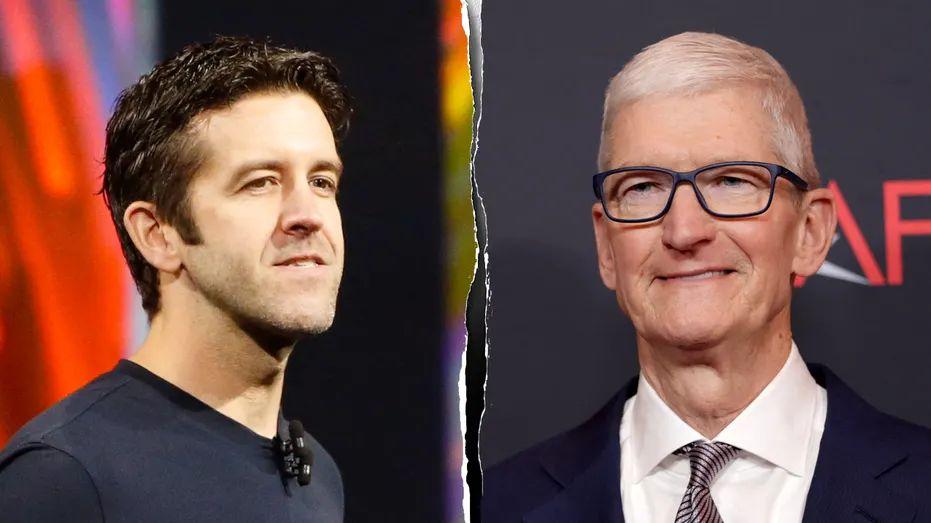
Apple Inc. is entering a pivotal moment as reports suggest the company is preparing for leadership change after more than a decade under Tim Cook, whose tenure has reshaped the tech giant in scale but divided opinion on innovation.
Cook took over in 2011 following the death of Steve Jobs, inheriting a company already known for breakthrough products. His challenge was different: sustain momentum, expand globally, and turn Apple into a financial powerhouse.
Under Cook, Apple became the first company to reach a $1 trillion market valuation, later surpassing $2 trillion and even $3 trillion at its peak. The company also expanded aggressively into services, launching platforms like Apple Music, Apple TV+, and iCloud, turning recurring revenue into a central pillar of its business.
Hardware evolution also continued. The Apple Watch became the world’s best-selling smartwatch, while AirPods helped define a new category in wireless audio. Apple’s transition to its own silicon chips starting with the M1 was widely praised as a strategic and technical breakthrough, reducing reliance on external suppliers.
Cook also positioned Apple as a leader in privacy, repeatedly emphasizing user data protection as a core value, a stance that set the company apart from competitors in the digital advertising space.
Unlike the era of Steve Jobs, which introduced entirely new product categories like the iPhone and iPad, critics argue that Apple under Cook has focused more on refinement than revolution. Many of its recent releases are seen as incremental upgrades rather than disruptive innovations.
Some analysts point to delayed or uncertain ventures into emerging areas such as augmented reality, artificial intelligence, and electric vehicles, arguing that Apple has been cautious rather than bold. Even high-profile projects like mixed-reality headsets have faced questions about timing, pricing, and mass-market appeal.
There is also a broader debate about whether Apple’s scale itself has made radical innovation harder. As one of the world’s most valuable companies, expectations are higher and risks more costly.
Supporters, however, argue that Cook’s approach reflects discipline, not stagnation. They point out that Apple has avoided major product failures, maintained strong margins, and built one of the most loyal customer bases in the industry.
Internally, Cook is also credited with strengthening Apple’s supply chain, expanding its presence in markets like China and India, and navigating geopolitical and regulatory challenges that have become increasingly complex in recent years.
As leadership transition talks gain momentum, the central question is no longer just who replaces Cook but what direction Apple takes next.
Will the company double down on its ecosystem strategy and services growth, or pursue the kind of bold, category-defining products that once defined its identity?