Physical Address
Delta Corner Tower,
Waiyaki Way, Westlands, Nairobi, Kenya.
Contact us:
Email: info@todaysw.com
Physical Address
Delta Corner Tower,
Waiyaki Way, Westlands, Nairobi, Kenya.
Contact us:
Email: info@todaysw.com
The Kenyan government has announced a new senior school fees structure for 2026 in a major policy shift aimed at protecting households from arbitrary and excessive school charges, making day schooling effectively free and capping boarding costs.
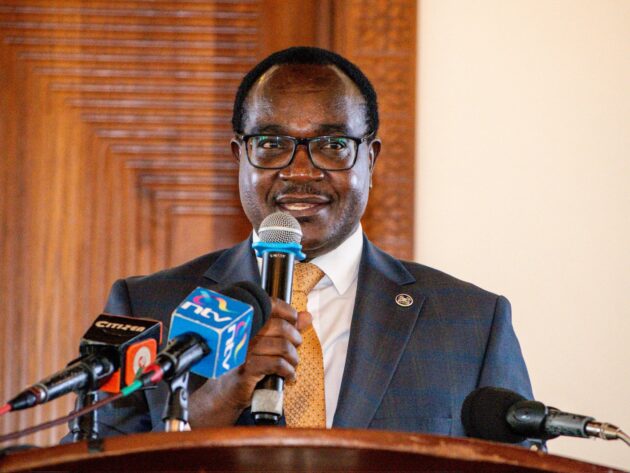
In a move designed to provide clarity and financial relief to families, the Ministry of Education has officially gazetted a new fee structure for all public senior schools, standardizing school charges and limiting extra levies long criticized by parents and education stakeholders. The Gazette notice was signed by Education Cabinet Secretary Julius Migos Ogamba and takes effect from January 5, 2026.
The updated fee framework, published in the Kenya Gazette on February 6, 2026, forms part of the government’s broader educational reforms under both the Competency-Based Curriculum (CBC) and the legacy 8-4-4 system, with the aim of boosting access, transparency and affordability in senior secondary education.
Under the new regulations:
CS Ogamba emphasised that no extra fees or levies may be charged beyond the stipulations of the Gazette notice and warned schools that deviation from the approved structure would not be tolerated. “No public school shall charge tuition fees or any other extra fees or levies contrary to the fee structure stipulated hereinabove,” the notice says.
The fee revision responds to longstanding concerns from parents and civil society groups about hidden charges, arbitrary levies and opaque school costs that have made secondary education increasingly unaffordable for many Kenyan families. In late 2025, parents raised alarms over conflicting fee demands and a “puzzle” surrounding the cost of senior school placement, creating stress for families planning for the 1.1 million learners set to join senior secondary this year.
By clarifying and legally capping the fees, the government aims to:
Alongside the new fee caps, the government has already released significant capitation funds ahead of the 2026 academic term to support core education costs, reinforcing its commitment to subsidised schooling at all levels. This includes millions in funding for free primary, junior and day secondary education released earlier this year.
Education officials have also put in place systems for monitoring compliance, urging parents and school administrators to report any irregular fee demands. Enforcement is expected to involve both Ministry field officers and local education officials.
Reactions to the fee restructure have been mixed but generally positive among parents, many of whom have struggled with rising living costs and school bills. With day schooling now free and boarding charges capped, families say they hope to better plan their finances and avoid sudden, unpredictable expenses at the start of each term.
However, some observers warn that implementation will be key: ensuring schools follow the legal caps and that additional costs — such as uniforms, transport or school supplies do not undermine the intended relief. Continuous oversight and public awareness will be critical as the 2026 school year unfolds.