Physical Address
Delta Corner Tower,
Waiyaki Way, Westlands, Nairobi, Kenya.
Contact us:
Email: info@todaysw.com
Physical Address
Delta Corner Tower,
Waiyaki Way, Westlands, Nairobi, Kenya.
Contact us:
Email: info@todaysw.com

Morocco has blamed misinformation on social media, human trafficking networks and a Spanish court ruling for helping trigger last week’s mass migration into the Spanish enclave of Ceuta, as both Rabat and Madrid continue investigating one of Europe’s largest border breaches in recent years.
Morocco‘s Interior Ministry said around 40,000 people took part in Thursday and Friday’s attempts to cross into Ceuta, while Spanish authorities estimate that between 50,000 and 60,000 migrants entered the territory during the crisis.
According to Moroccan officials, false information circulating online convinced thousands that they would be allowed to enter Spain without consequences. Authorities also accused criminal smuggling networks of exploiting the situation by encouraging desperate migrants to make the dangerous journey.
The ministry further argued that a recent decision by a Spanish court contributed to the surge by creating the perception that migrants reaching Ceuta would not be immediately returned to Morocco.
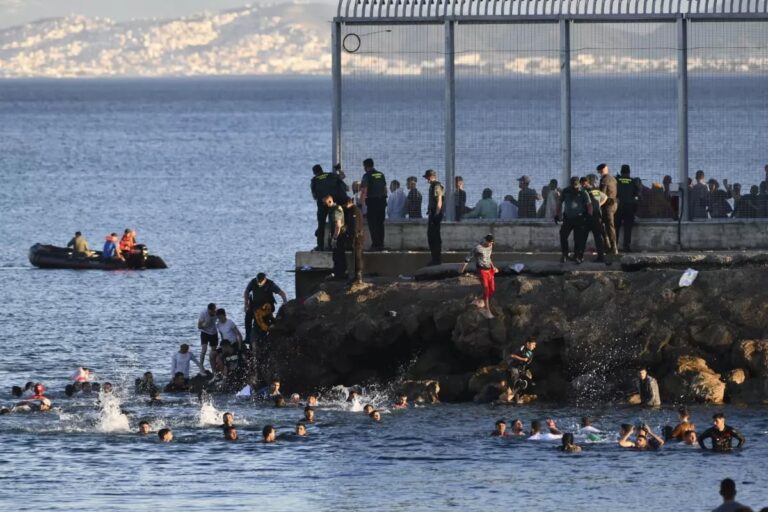
The unprecedented influx overwhelmed Spanish security forces, forcing Madrid to deploy military personnel to reinforce police units guarding the border. Thousands of migrants crossed either by swimming around the coastal breakwater or climbing border barriers, temporarily overwhelming reception facilities.
Spanish authorities have since regained control of the border and say the vast majority of those who entered Ceuta have already been returned to Morocco. However, Spanish Interior Minister Fernando Grande-Marlaska said the death toll linked to the crisis has risen to around 67, making it one of the deadliest migration incidents ever recorded around the enclave.
The crisis has also triggered political tensions across Europe. Italy temporarily suspended parts of its Schengen visa cooperation with Spain, while several European leaders called for tougher external border controls. Spain has criticised those reactions, arguing that Ceuta is not part of the Schengen Area and insisting it restored order within 48 hours.
Ceuta and neighbouring Melilla are Spain’s two autonomous territories in North Africa and represent the European Union’s only land borders with Africa. Both enclaves have long been major flashpoints for irregular migration, but last week’s mass crossing was unprecedented in scale.
Moroccan authorities say investigations into the role of trafficking networks and the spread of online misinformation are continuing as both countries seek to prevent another large-scale border breach.