Physical Address
Delta Corner Tower,
Waiyaki Way, Westlands, Nairobi, Kenya.
Contact us:
Email: info@todaysw.com
Physical Address
Delta Corner Tower,
Waiyaki Way, Westlands, Nairobi, Kenya.
Contact us:
Email: info@todaysw.com
At the Munich Security Conference, U.S. Secretary of State Marco Rubio told European allies that Atlantic ties are at a crossroads, demanding more defense spending from NATO members.
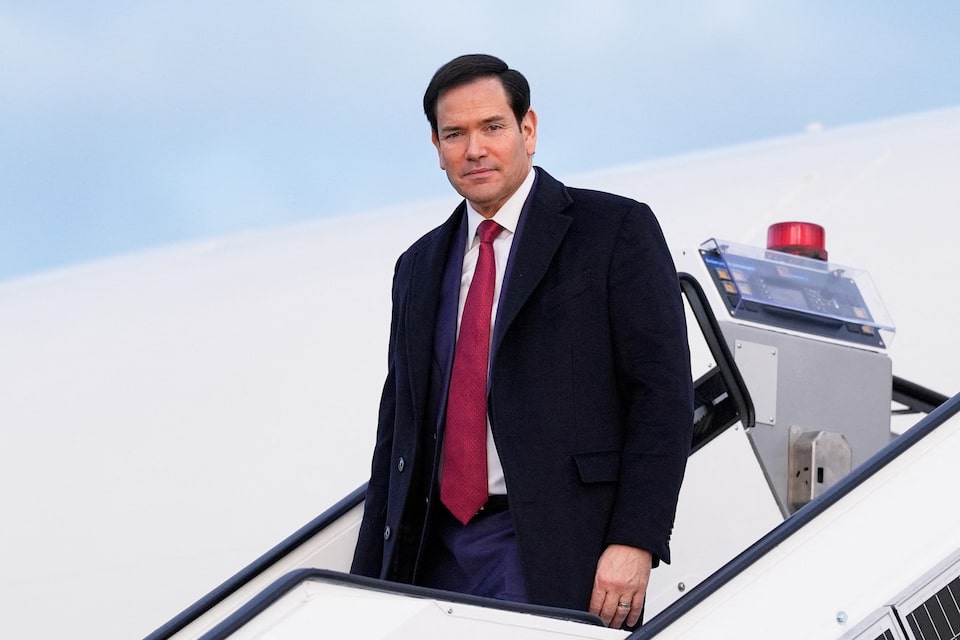
Washington’s top diplomat, U.S. Secretary of State Marco Rubio, has sounded a stark warning to European partners that the transatlantic relationship and broader global security environment stand at a “defining moment,” as he leads the American delegation to the 2026 Munich Security Conference in Germany.
Rubio, speaking before his departure from the United States, described today’s geopolitics as fundamentally different from the world of past decades. “The old world is gone, frankly, the world that I grew up in, and we live in a new era in geopolitics,” he said, urging nations to re-evaluate their roles and strategies in a rapidly shifting international order.
The remarks come amid mounting tension and uncertainty in transatlantic ties, following a tumultuous period under the current U.S. administration that saw sharper criticism of European allies, trade disputes, and controversial diplomatic episodes such as prior threats regarding Greenland and NATO commitments. European trust in Washington has dropped, and many capitals have begun discussing greater strategic autonomy.
Rubio’s message is seen as somewhat warmer than last year’s confrontational tone from other U.S. officials, but it still stresses the seriousness of the moment. Ahead of the Munich conference which traditionally gathers Europe’s political and security leadership. Rubio emphasized the need for deeper cooperation on shared challenges including Russia’s invasion of Ukraine, global conflict hotspots, rising authoritarian influence, and NATO’s future relevance.
European leaders, for their part, appear cautious but engaged. Germany’s leadership and other EU officials are expected to push for stronger defense capabilities and a clearer articulation of Europe’s security priorities, even as they seek reassurance about U.S. commitments. The Munich forum, with more than 70 heads of state and government attending, is expected to be a crucible for debate on whether the traditional transatlantic alliance can adapt to what many view as an unpredictable era.
Rubio’s presence underscores how the United States intends to calibrate its diplomatic approach with Europe balancing calls for strategic reassessment with pledges to continue cooperation on issues from Ukraine to global economic stability. Analysts see his remarks as a signal that Washington wants to reinforce rather than abandon transatlantic partnerships, even as all sides confront a more complex and multipolar world.
The Munich Security Conference this weekend will test whether Western allies can map out a cohesive direction amid diverging priorities and whether Rubio’s “defining moment” warning will translate into tangible policy alignment in a time of intensifying geopolitical competition.