Physical Address
Delta Corner Tower,
Waiyaki Way, Westlands, Nairobi, Kenya.
Contact us:
Email: info@todaysw.com
Physical Address
Delta Corner Tower,
Waiyaki Way, Westlands, Nairobi, Kenya.
Contact us:
Email: info@todaysw.com
Angola’s president João Lourenço has convened high-level talks in Luanda, pushing for an immediate ceasefire in eastern Democratic Republic of Congo as fighting with M23 drags on.
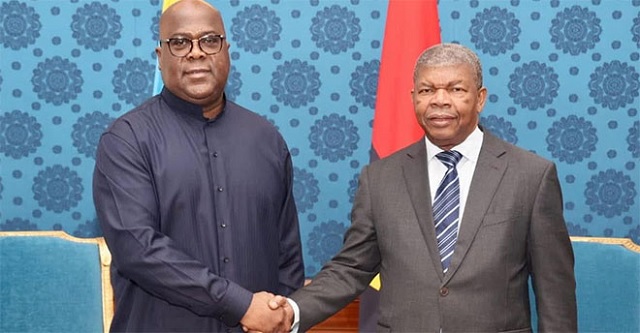
Angola on Tuesday positioned itself at the center of a renewed diplomatic effort to halt the war in eastern Democratic Republic of Congo, hosting senior delegations from the Congolese government and the M23 rebel movement in Luanda.
President João Lourenço, acting in his role as a regional mediator, opened the talks with a narrow objective. An immediate ceasefire. No parallel agenda. No long communiques. Just stopping the guns.
The Luanda meetings come after weeks of intensified clashes in North Kivu, where M23 fighters have pushed closer to major towns, displacing civilians and stretching the Congolese army thin. Aid groups report growing pressure on camps around Goma, with fresh waves of families fleeing fighting in Rutshuru and Masisi territories.
Congolese officials arrived in Angola insisting that any pause in fighting must be verifiable and unconditional. They accuse M23 of using previous ceasefires to regroup, rearm, and advance positions. Kinshasa has repeatedly said it will not negotiate under fire.
M23 representatives, for their part, have framed the talks as proof that the conflict cannot be resolved militarily. The group says it is ready to halt operations if Congolese forces and allied militias do the same, and if regional guarantees are put in place.
Angola’s mediation builds on earlier regional efforts led by the East African Community and the International Conference on the Great Lakes Region, both of which struggled to enforce ceasefire commitments on the ground. Several previous truces collapsed within days, with each side blaming the other for violations.
Diplomats following the Luanda process say Lourenço is banking on direct engagement and tighter timelines. The focus, according to officials familiar with the talks, is on defining clear frontlines, reopening humanitarian corridors, and deploying monitors quickly if an agreement is reached.
The talks are also unfolding against a tense regional backdrop. The Congolese government has long accused Rwanda of backing M23, an allegation Kigali denies. The issue has strained relations and drawn in regional actors, complicating mediation efforts and raising fears of wider confrontation.
International partners, including the African Union and the United Nations, have welcomed Angola’s initiative, calling for restraint and urging all sides to prioritize civilian protection. MONUSCO, the UN peacekeeping mission in DRC, remains overstretched as violence spreads across multiple fronts.
By late afternoon, delegations were still meeting behind closed doors in Luanda. No joint statement had been released, and no ceasefire timeline had been announced.