Physical Address
Delta Corner Tower,
Waiyaki Way, Westlands, Nairobi, Kenya.
Contact us:
Email: info@todaysw.com
Physical Address
Delta Corner Tower,
Waiyaki Way, Westlands, Nairobi, Kenya.
Contact us:
Email: info@todaysw.com
Former Zimbabwean president Robert Mugabe has surfaced in the latest batch of Jeffrey Epstein files released by the U.S. Department of Justice, appearing in email exchanges and unverified claims though researchers stress mention does not imply criminal conduct.
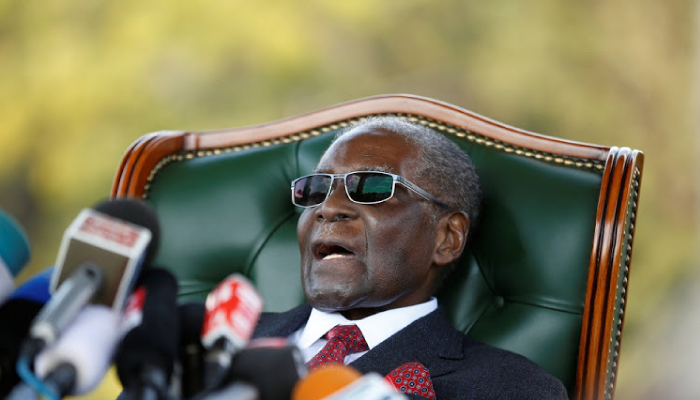
Zimbabwe’s long-time leader Robert Mugabe has been named in documents from the Epstein Files, a massive trove of records linked to the investigations of convicted U.S. financier Jeffrey Epstein, officials and analysts said. The mentions underline the global reach of Epstein’s network and the wide scope of information contained in millions of pages of government records made public in early 2026.
The files released under the Epstein Files Transparency Act — include emails, correspondence and investigative notes tied to Epstein’s activities, contacts and alleged financial dealings. Among the newly disclosed material are several items referencing Mugabe, who led Zimbabwe for nearly four decades before his ouster in 2017 and died in September 2019 at age 95.
One of the key references to Mugabe appears in an email exchange from 2015 between Epstein and Japanese entrepreneur Joichi “Joi” Ito. The subject line “fertile land for exploration” involved a discussion about reaching out to Zimbabwe’s leader at the time to explore ideas for introducing a new currency after the collapse of the Zimbabwean dollar amid hyperinflation.
In the correspondence, when asked whether Epstein was friends with Mugabe, Epstein reportedly replied:
“No, but can easily get his attention, Zimbabwe would be a great petrie dish, its also supposed to be beautiful.”
Another document from April 2012 mentioned Mugabe in a casual email mistakenly asserting he was on his deathbed in Italy a claim that was demonstrably false, as Mugabe was alive and leading national celebrations shortly afterward.
FBI records from 2017 included unverified testimony from a confidential source alleging Epstein had acted as a wealth manager for Mugabe, similar to claims about Russian President Vladimir Putin. However, these statements are not corroborated, and the Department of Justice and expert commentators stress that such material represents unverified claims or hearsay.
Experts and media outlets such as the BBC have underscored that inclusion in the Epstein files does not constitute evidence of criminal behaviour or meaningful involvement in Epstein’s abuses or trafficking. The files contain a vast mix of emails, reports, tips, summaries and redacted investigative notes, some referring to social, diplomatic or hypothetical interactions without substantiation.
In the case of Mugabe, his name emerges primarily in economic or peripheral contexts rather than anything tied to the criminal activities that defined Epstein’s legacy. His mention is among numerous references to public figures, diplomats and leaders around the world that appear in the documents.
Mugabe a liberation hero turned long-serving head of state — remains a polarising figure in Zimbabwe and abroad. He led Zimbabwe to independence in 1980 and served as prime minister and then president until he was ousted in a 2017 coup amid economic collapse and political turmoil.
During his later years in office, Mugabe was the subject of U.S. sanctions, meaning American individuals and companies were barred from financial dealings with him under U.S. law. Analysts note that any suggestion of wealth-management links should be viewed cautiously, given the sanctions regime and the unverified status of such claims in the files.
Zimbabwean officials and commentators have not issued an official response specifically addressing the Epstein file references, and members of Mugabe’s family have not publicly commented on the documents. Media requests for comment through outlets such as the BBC have sought clarification from authorities but yielded limited immediate responses.