Physical Address
Delta Corner Tower,
Waiyaki Way, Westlands, Nairobi, Kenya.
Contact us:
Email: info@todaysw.com
Physical Address
Delta Corner Tower,
Waiyaki Way, Westlands, Nairobi, Kenya.
Contact us:
Email: info@todaysw.com
Saif al-Islam Gaddafi, the 53-year-old son of former Libyan leader Muammar Gaddafi, was shot dead by unknown gunmen at his home in Zintan, sparking a formal investigation by Libyan prosecutors into his assassination.
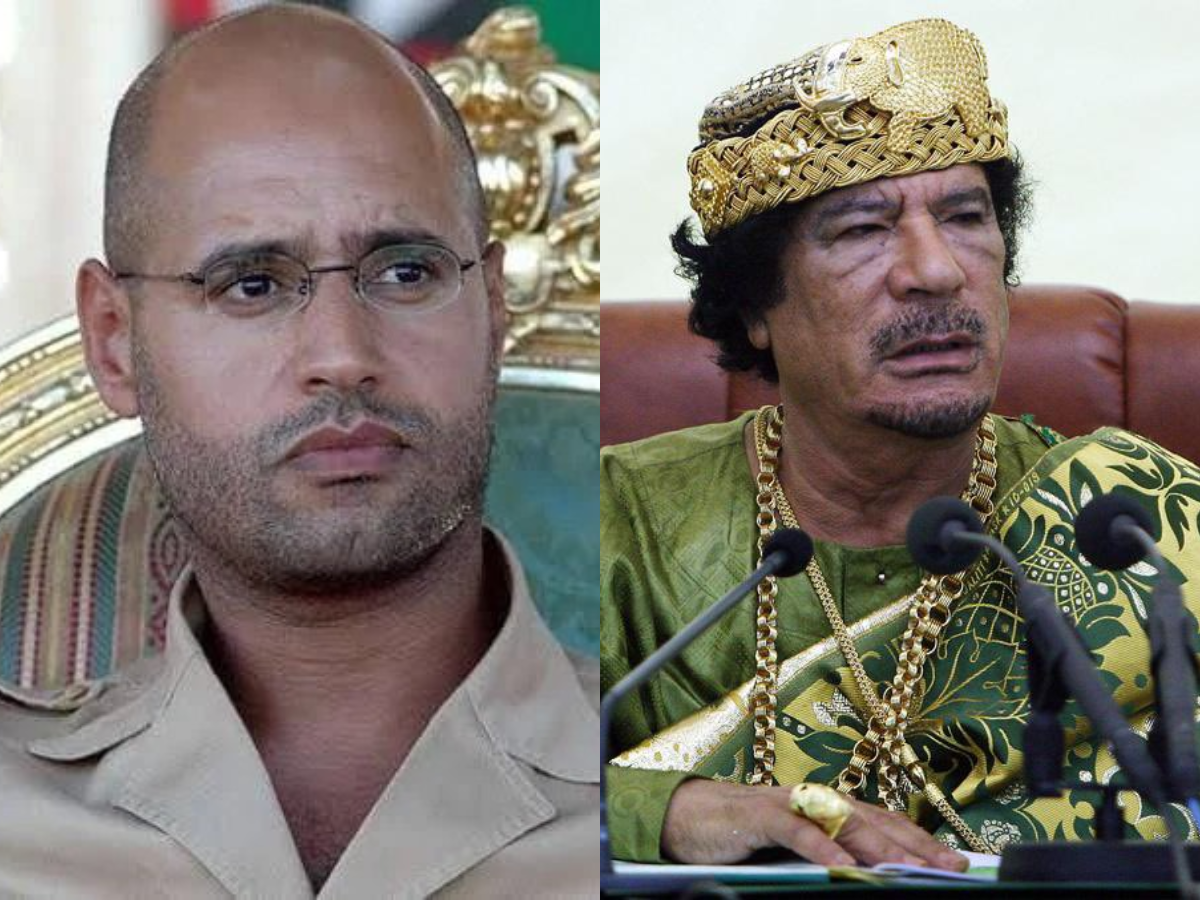
Saif al-Islam Gaddafi once seen as a potential heir to his father’s decades-long rule and a controversial political figure in Libya’s fractious post-2011 landscape was killed in an apparent assassination on Tuesday when four masked assailants stormed his residence in the western city of Zintan and opened fire, Libyan officials and his legal team said.
The Libyan Attorney General’s Office confirmed on Wednesday that prosecutors have launched a formal investigation into the killing and that forensic and law-enforcement teams were dispatched to the scene to collect evidence and interview witnesses as part of efforts to identify those responsible.
Born in June 1972 in Tripoli, Saif al-Islam was the second-eldest son of former Libyan ruler Muammar Gaddafi and his wife Safia Farkash. Educated in the West, including at the London School of Economics, he emerged in the early 2000s as one of the more visible and internationally prominent members of the Gaddafi regime, often tasked with diplomatic engagements and efforts to repair Libya’s global image after years of isolation.
Initially viewed by some as a reformist face of the regime, Saif’s reputation became deeply tarnished during Libya’s Arab Spring uprising in 2011, when he played a leading role in his father’s harsh crackdown on protesters actions that drew widespread international condemnation and led to an arrest warrant from the International Criminal Court (ICC) on charges of crimes against humanity.
Following the fall of the Gaddafi regime and the death of his father later in 2011, Saif was captured in Zintan and held by a militia for six years. In 2015, a Libyan court sentenced him to death in absentia for his role in suppressing the uprising. Under an amnesty issued by rival authorities in 2017, he was eventually released and remained in Zintan while still wanted by the ICC.
He attempted a political comeback in 2021 by announcing a bid for the Libyan presidency, a move that reignited debate over Libya’s direction amid years of fragmentation. However, his candidacy was disqualified due to lingering legal and political obstacles tied to his past.
According to multiple reports, four unidentified gunmen disarmed or disabled security cameras before attacking Gaddafi’s home, suggesting a planned and targeted assassination. His political team described the incident as a “cowardly and treacherous assassination,” though no group has yet claimed responsibility or publicly stated a motive.
Libyan prosecutors said that forensic experts had examined the scene and that efforts were underway to locate and question witnesses, gather physical evidence and trace the movements of potential suspects. Authorities have not released definitive details on potential motives or whether the killing was tied to political rivalries, tribal dynamics, or broader security volatility in Libya.
Libya has been wracked by instability since 2011, split between rival administrations in Tripoli and the east, with various armed groups exerting control over different regions. The assassination has raised concerns about a potential escalation of tensions among factions, especially those loyal to remnants of the Gaddafi era, whose supporters have periodically sought renewed influence amid the country’s political vacuum.
The killing drew reactions from regional and international actors calling for transparency. Politicians and security analysts warn that Gaddafi’s death could reverberate in Libya’s already fragile political environment, potentially affecting ongoing mediation efforts and any future attempts to unify rival factions into a single national governing framework.
The Libyan investigation aims to determine not only who carried out the killing but also whether it was linked to broader political motives or a settling of scores in a country long plagued by militia rivalries.