Physical Address
Delta Corner Tower,
Waiyaki Way, Westlands, Nairobi, Kenya.
Contact us:
Email: info@todaysw.com
Physical Address
Delta Corner Tower,
Waiyaki Way, Westlands, Nairobi, Kenya.
Contact us:
Email: info@todaysw.com
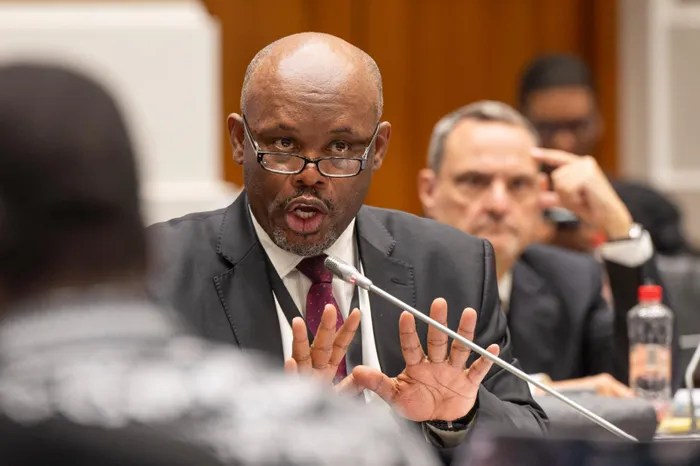
New testimony before a South African parliamentary Ad Hoc Committee has spotlighted serious alleged irregularities in the appointment of Lieutenant-General Shadrack Sibiya, the suspended Deputy National Police Commissioner, dating back to his role in the City of Johannesburg’s forensic services raising questions about governance and accountability in both municipal and national institutions.
On Thursday, Mesuli Mlandu, a Special Projects Advisor in the City Manager’s Office of the City of Johannesburg (CoJ), told lawmakers that Sibiya’s elevation to head of the Group Forensic and Investigations Services (GFIS) in 2016 was irregular and possibly unlawful. According to Mlandu, Sibiya assumed the post shortly after interviews were held without proper recruitment procedures, council approval or clear authority and then continued to function in that senior capacity for several years.
Mlandu told the committee that the appointment process appeared to contravene established regulations for filling senior municipal positions, noting that Sibiya had failed a competency assessment and that the formal council approval required under the Municipal Structures Act never occurred. He said that despite legal advice warning that an investigation should be launched due to glaring procedural issues, the appointment was allowed to stand and even paved the way for further promotions in the South African Police Service (SAPS).
“The appointment of a head of department was approved improperly, and there was effectively a ‘bogus’ head of department operating in the City of Johannesburg for five years,” Mlandu said, urging accountability for those involved.
Mlandu also accused Sibiya of misleading Parliament’s ad hoc committee during his testimony, asserting that the deputy national commissioner’s responses under oath did not align with official documents and previous reports, including those from the Public Protector and city records.
Sibiya’s controversial tenure in Johannesburg has attracted scrutiny before. He previously served as head of the Gauteng Hawks, South Africa’s elite investigative unit, and faced allegations related to the illegal rendition of Zimbabwean nationals before being reinstated by the high court in 2021. Later, he joined the City of Johannesburg’s forensic unit a move that was criticised by some officials at the time.
The City of Johannesburg adviser’s testimony also linked the irregular appointment to significant financial concerns, alleging that Sibiya’s role in GFIS involved irregular expenditure amounting to millions of South African rand. Independent legal reviews commissioned by the city reportedly warned of the need for deeper investigations, but those findings were allegedly blocked from reaching council under previous municipal administrations.
At the time, Mlandu said he had communicated his concerns to senior national officials, including former Police Minister Bheki Cele and then Cooperative Governance Minister Thembi Nkadimeng, providing reports that outlined the alleged irregularities reports he now says were ignored.
Opposition voices have seized on the testimony to call for accountability, with some lawmakers urging legal consequences for those who may have flouted recruitment and oversight laws. Critics argue that allowing a senior law-enforcement officer to rise through the ranks amid such controversy could damage public trust and undermine the fight against corruption.
However, defenders of Sibiya and officials involved in his appointment have pushed back. ActionSA leader Herman Mashaba, who was mayor of Johannesburg when Sibiya’s appointment occurred, refuted claims that he acted improperly, pointing to earlier investigations by the Public Protector that concluded the appointment complied with municipal legislation. Mashaba has challenged critics to make the relevant appointment documents publicly available to verify the facts.
Sibiya has also denied wrongdoing in related probes and has maintained that processes involving his career have been lawful. Previously, he rejected allegations of improper conduct in both his police and municipal roles, asserting he acted within the scope of his duties.