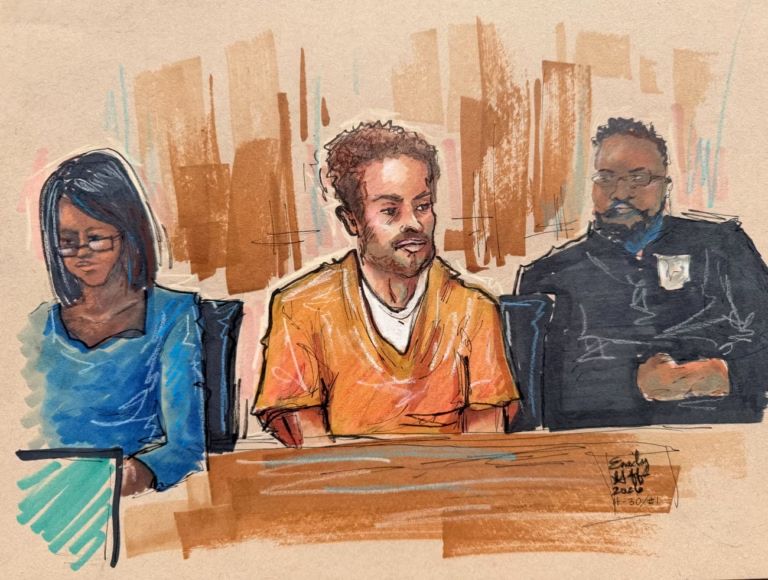
In Dallas, Texas, early Wednesday morning, chaos erupted when a man identified as Joshua Jahn fired from the roof of a nearby building at an Immigration and Customs Enforcement (ICE) facility. The attack targeted a transport van carrying ICE detainees. Two detainees died, one died at the scene and another later at the hospital, and another person was critically injured. Jahn was found dead of a self-inflicted gunshot wound.
Authorities say Jahn approached the facility under cover of darkness. He used a high vantage point — the roof of an adjacent building — to shoot at both the van and parts of the ICE facility. Evidence at the scene included bullet casings engraved with the words “ANTI-ICE,” raising questions about his motive. While no ICE agents or federal law enforcement officials were hurt, the violence has shaken the community and raised concerns over ideological violence.
Joshua Jahn lived in the Dallas area but had a recent connection to Oklahoma. Public records show he had voted in past elections as an independent. He also had a criminal record from about a decade ago: in 2016, he was charged in Texas with distribution of marijuana. That case was resolved, and he had been living quietly for years before this event.
His older brother, Noah Jahn, spoke to reporters, saying that Joshua didn’t have overt political or ideological interests — or at least none that were shared with family. Noah described his brother as someone who moved in and out of jobs, including working as a programmer, and had recently been unemployed. He said he had no idea Joshua held strong views about ICE or immigration policy until after the incident.
Investigators from the FBI, Dallas Police, Homeland Security, and other federal authorities are leading the case. They are examining how Jahn acquired his weapon, how he decided on the vantage point for the attack, what planning was involved, and whether anyone helped him. Part of the investigation is focused on the engraved bullet casings. Authorities are treating those as possible indications of motive, but they caution nothing is confirmed.
Public reaction has been swift. Local officials have condemned the violence and offered condolences to the victims’ families. ICE and federal law enforcement agencies are reviewing security protocols, especially for transporting detainees and facility protection. Some political leaders have also called for calmer rhetoric when discussing immigration enforcement agencies, citing fear that anti-ICE language may lead to hateful or violent actions.
While details are still being gathered, the incident adds to concerns about ideological motivations behind violent attacks. It’s not yet clear how Jahn decided to act, or what exact message he intended to send beyond the “ANTI-ICE” engraving. The authorities say they intend to release more detailed findings once the forensic and ballistic analyses are complete.
For now, Joshua Jahn’s actions have left many questions open: How much did his past influence this event? Did he plan the attack long in advance or act more impulsively? What role—if any—did political or ideological beliefs play in pushing him toward violence? The answers will likely shape how authorities respond to threats against ICE and similar agencies, and how communities address radicalization, grievance, and security.