Afghanistan launched offensive strikes against Pakistani positions along the talked Durand Line border on Thursday, prompting a forceful military response from Pakistan that has intensified a growing cycle of violence between the neighboring countries.
Afghan officials said their forces conducted “extensive retaliatory operations” against Pakistan’s military centres and installations along the eastern frontier, targeting multiple sectors from provinces including Khost, Paktia and Nuristan. Afghanistan framed the offensive as a response to what it described as repeated provocations and previous Pakistani air raids.
Islamabad accused Kabul’s forces of opening “unprovoked fire” across several border locations in Khyber Pakhtunkhwa province and said Pakistan’s armed forces responded “immediately and effectively”, inflicting heavy losses on opposing fighters and destroying numerous positions.
Pakistan’s counter-operations, named Operation Ghazab-Lil-Haqq, involved precision strikes on border outposts and militant positions, with Pakistani security sources reporting dozens of fighters killed and several posts neutralised. Officials said no Pakistani military outposts had been captured or damaged during the exchanges.
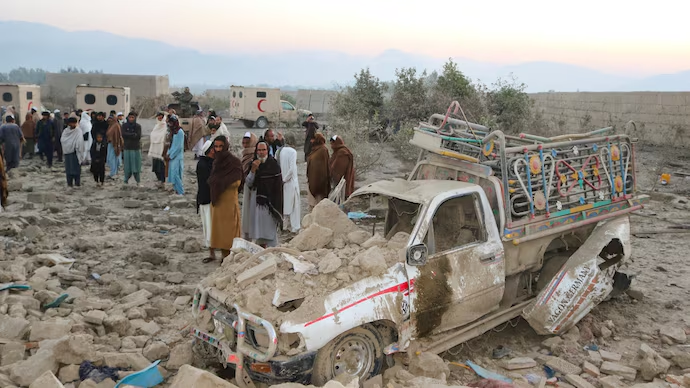
The latest clashes come amid a broader spike in hostilities that followed Pakistani airstrikes inside Afghanistan in recent days — seen by Islamabad as necessary actions against armed groups blamed for attacks inside Pakistan. Afghan authorities condemned the strikes, accusing Pakistani forces of violating Afghan sovereignty and causing civilian casualties.
Both countries have accused the other of initiating hostilities. Kabul described its operations as a “retaliatory offensive” against continued aggression by Pakistani forces, while Islamabad characterised the Afghan actions as unprovoked aggression requiring a strong defensive response.
The violence has raised concerns about the stability of the already volatile border region and follows months of friction over security, militancy and contested territorial issues. Analysts warn that without diplomatic intervention, further escalation could destabilise wider regional security.