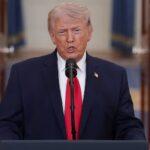
Speaking from the White House, the President of the United States said the administration will pursue nationwide voter ID standards to “protect election integrity” and restore public confidence in federal elections.
Under the proposal, voters in federal elections would be required to present government-issued identification at polling stations. Details on whether the mandate would come through executive action or legislation were not immediately clarified.
Election law in the United States is largely administered by individual states, and voter ID requirements vary widely. Some states already enforce strict photo ID rules, while others allow alternative forms of verification or do not require photo identification at all.
Legal scholars and civil rights groups reacted swiftly, arguing that the Constitution grants states primary authority over election administration. Critics say a federally imposed mandate could face challenges in the courts, particularly regarding states’ rights and equal access to voting.
Supporters of voter ID laws contend that such measures help prevent fraud and enhance transparency, though numerous studies have found voter impersonation to be rare. Opponents argue that strict ID requirements can disproportionately affect low-income voters, minorities and the elderly.
Members of Congress signaled that any federal legislation on voter ID would face intense debate on Capitol Hill, with party leaders already staking out opposing positions.
The announcement sets the stage for legal and political battles as the next federal election cycle approaches, with further details on implementation expected in the coming weeks.