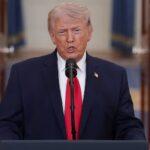
In what the White House is calling the “largest deregulatory action in American history,” President Donald Trump has officially scrapped a cornerstone scientific finding that underpinned nearly all United States climate policy. The decision revokes the 2009 Environmental Protection Agency endangerment finding — the determination that greenhouse gases like carbon dioxide and methane endanger public health and welfare by driving climate change.
The endangerment finding had been the legal basis for federal limits on pollution from car tailpipes, power plants, oil and gas facilities and other major sources of planet-warming emissions. Without it, the government’s authority to enforce or justify most U.S. climate regulations under the Clean Air Act is effectively erased.
White House press secretary Karoline Leavitt said the rollback will reduce regulatory costs on families and businesses and save the economy an estimated $1.3 trillion, mostly by eliminating stricter automobile emission standards. The move was formalized at a White House event with EPA Administrator Lee Zeldin, who echoed claims that the action removes burdensome rules and frees up economic growth.
Critics from environmental groups and scientific communities instantly condemned the decision. They argue the administration’s action ignores overwhelming scientific evidence of the danger climate change poses to health, economic stability and national security. A review by the National Academies of Sciences last year reaffirmed the original finding’s validity, saying evidence of harm from greenhouse gases is stronger now than when the rule was first adopted.
Legal experts also predict heavy court challenges, noting that the endangerment finding was based on a 2007 Supreme Court ruling in Massachusetts v. EPA, which determined greenhouse gases are pollutants under federal law. With that foundation undone, states and environmental groups are expected to argue that the rollback is unlawful and that federal climate protections remain necessary to curb rising temperatures and extreme weather harms.
Investors and corporations reacted with concern, warning that regulatory uncertainty could disrupt long-term planning. Some firms have already invested heavily in clean energy and emissions reduction to meet rising global standards, despite the U.S. rollback.
The Trump administration’s action comes amid other energy policy shifts, including new federal support for coal plants and directives to prioritize fossil fuel production. Together, these moves represent a broader push to deregulate environmental protections and bolster traditional energy sectors.
Environmental advocates say the repeal will likely lead to higher pollution, increased health problems and greater climate risks. They point to mounting climate-related disasters from floods and heat waves to wildfires as evidence that strong emission controls remain essential. Court battles over the rollback are expected to begin soon.